Indoor Evaporation and Condensation – Risks and Solutions
Indoor Evaporation and Condensation: Risks and Solutions
When most people think of leaks from windows or skylights, they’re likely picturing a heavy rain or snowstorm pounding away at a home or building until the water finds its way through a crack or opening. However, moisture doesn’t always attack from the outside, especially at times when relative humidity is at high levels.
This is where indoor evaporation and condensation come into play, and, if the home or building is not properly sealed, insulated, and having proper ventilation in place, the risks of moisture damage greatly increases.
Why Indoor Moisture Matters
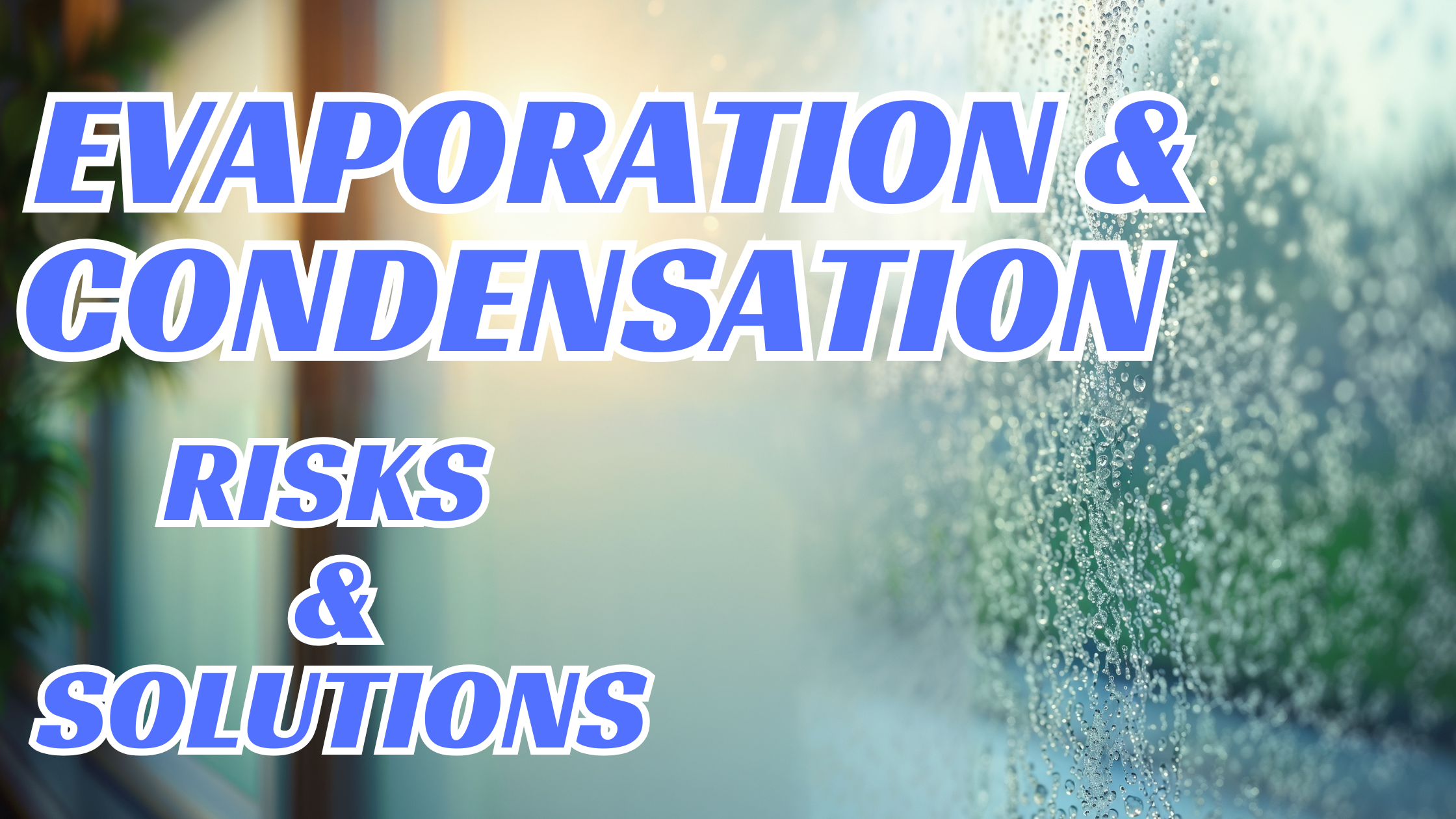
Indoor evaporation from cooking, showering, and daily living raises humidity levels. When warm, moist air meets cold surfaces like windows, skylights, or poorly insulated walls, condensation forms. This can lead to hidden water intrusion, mold growth, and structural deterioration.
See the chart below to learn more about what temperatures and humidity levels lead to condensation.
Dew Point and Condensation Risk Chart
| Indoor °F \ RH % | 30% | 40% | 50% | 60% | 70% | 80% | 90% |
|---|---|---|---|---|---|---|---|
| 40°F | 9.7 | 16.7 | 23.1 | 28.8 | 34.0 | 38.6 | 42.8 |
| 50°F | 24.6 | 31.8 | 38.2 | 43.8 | 49.0 | 53.6 | 57.8 |
| 60°F | 37.6 | 44.8 | 51.2 | 56.8 | 62.0 | 66.6 | 70.8 |
| 70°F | 49.2 | 56.3 | 62.7 | 68.3 | 73.5 | 78.1 | 82.3 |
| 80°F | 60.0 | 67.0 | 73.4 | 79.0 | 84.2 | 88.8 | 93.0 |
| 90°F | 70.2 | 77.1 | 83.5 | 89.1 | 94.2 | 98.8 | 103.0 |
How to use this chart
- Find your indoor temperature on the left and your indoor relative humidity across the top.
- The number in the cell is the dew point temperature (°F).
- Condensation risk increases when the glass surface temperature is at or below the dew point.
Tip: If your window/skylight surface is colder than the dew point shown, expect condensation.
How Leak Stoppers Inc. Prevents Moisture Problems
For a safe, healthy, and comfortable home or building, it’s absolutely critical to ensure that indoor moisture levels are kept under control to avoid the damage that unchecked condensation can bring.
Leak Stoppers Inc. uses advanced methods to stop condensation and leaks before they cause damage:
- Draft Sealing: Closing gaps around windows, doors, and attic access points.
- Proper Insulation: Installing insulation with the correct R‑value to prevent condensation and energy loss.
- Balanced Ventilation: Ensuring airflow systems remove excess moisture while maintaining efficiency.
- Thermal Imaging & Drone Inspections: Pinpointing hidden insulation gaps and draft points.
- Vapor Barriers: Blocking or allowing moisture vapors depending on specific situations.
At Leak Stoppers Inc., one of the keys to our success is understanding the difference between breathable and non-breathable vapor barriers. Knowing when to block moisture and when to allow it to escape is essential for effectively managing evaporation and condensation.
To achieve this, we use specialized vapor barriers, closed-cell spray foam, dehumidifiers, and drywells, along with comprehensive basement moisture and waterproofing solutions. These measures help us control vapor before it can contribute to mold growth, roof sheathing rot, or fastener corrosion.
The Consequences of Ignoring Condensation
Unchecked condensation can:
- Encourage mold growth and poor indoor air quality
- Cause wood rot and structural damage
- Allow outside moisture to penetrate indoors, worsening leaks
These are just a few of the risks that come with ignoring condensation issues, and if ignored, it’s not a matter of “if” they will happen – it’s simply a matter of “when” will they happen.
Call Leak Stoppers Inc. Today
Protect your home from condensation and leaks. For expert attic leak repair, moisture control, and roof leak prevention, call Leak Stoppers Inc. today at 631-669-1570 or click here to use our online contact form — Long Island’s most reliable residential and commercial leak repair specialists.